
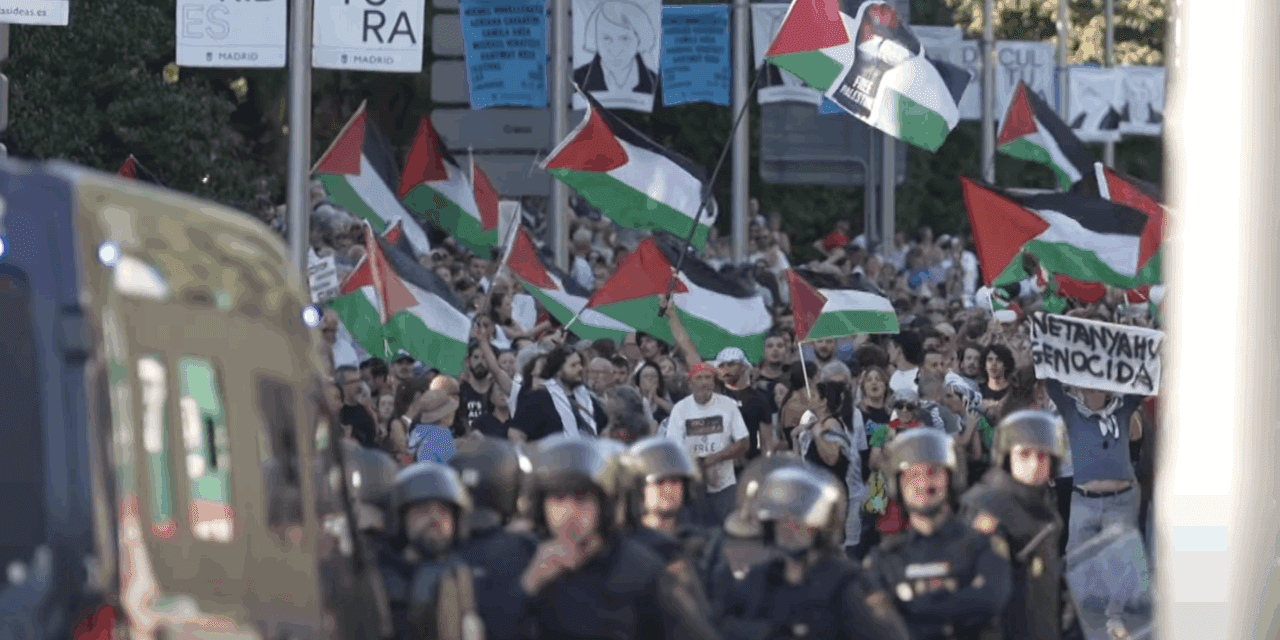
The 2025 Vuelta a España will be remembered not just for its thrilling climbs and nail-biting sprints, but for its chaotic and unprecedented conclusion in Madrid. What was intended to be a celebratory finale devolved into a scene of unexpected upheaval as massive pro-Palestinian protests brought the race to a standstill, ultimately voiding the final stage. While Jonas Vingegaard secured overall victory, the lingering image will be one of political activism intersecting dramatically with the world of professional cycling.
The sheer scale of the demonstrations is what makes this event so striking. Thousands of protestors effectively shut down a major international sporting event, highlighting the power of organized civil action in a way rarely seen on such a prominent global stage. The organizers’ decision to void the final stage, while undoubtedly disruptive, was arguably the only responsible course of action, prioritizing the safety of riders and spectators above all else. The images of the halted peloton, surrounded by a sea of protestors, are sure to be iconic.
This incident raises important questions about the intersection of sports and politics. While sporting events often strive for neutrality, they inevitably become platforms for expression, particularly when significant global events are unfolding. The Vuelta’s unexpected disruption serves as a potent reminder that the carefully constructed world of professional cycling can be irrevocably impacted by forces far beyond the control of its organizers. It’s a challenge for future events to consider: how to balance the spectacle of competition with the realities of socio-political activism.
Beyond the immediate impact on the race itself, the voiding of the final stage has sparked debate about its implications for the overall standings. While Vingegaard's victory remains unchallenged, the lack of a conclusive final stage leaves a sense of incompleteness. Some might argue that the drama surrounding the protest overshadows the sporting achievement, transforming the victory into a footnote in a much larger story. Others will see it as a testament to Vingegaard’s dominance, a victory secured despite extraordinary circumstances.
In conclusion, the 2025 Vuelta a España’s controversial ending serves as a compelling case study in the unpredictable nature of large-scale events. The clash between the meticulously planned world of professional cycling and the powerful surge of political protest created a memorable, albeit unsettling, spectacle. The images and the controversy will linger long after the dust settles, forcing reflection on the delicate balance between athletic competition and the broader social and political landscape in which it exists. The question remains: will this unprecedented event influence future race security protocols and how will the cycling world respond to similar unforeseen disruptions?